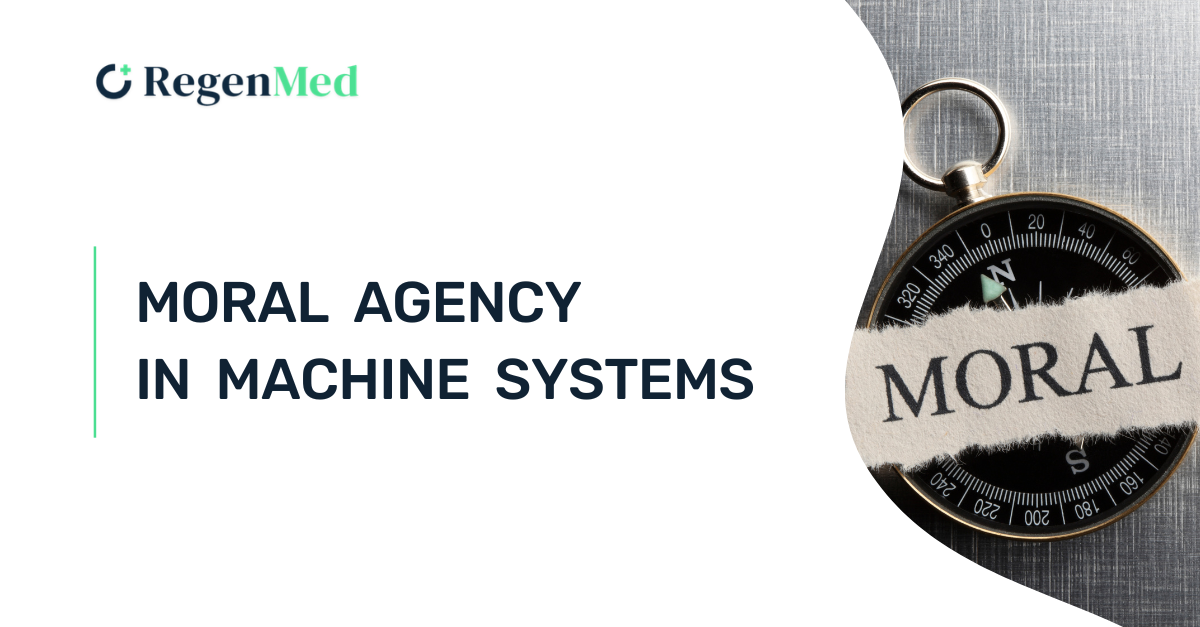
Moral Agency in Machine Systems
AI cannot be morally responsible: it has parameters, not awareness, choice, or consequence. This article argues that responsibility must remain human and be technically memorialized through explicit custodianship, audit trails, and federated governance.
See more

The Mirage of the Moral Machine It has become fashionable to speak of “ethical AI.” But machines have no morality; they have parameters. They cannot intend, regret, or take responsibility. The danger of anthropomorphism is that it transfers moral weight from the human to the system — from conscience to computation. When a model produces a harmful outcome, we speak as though it “decided” incorrectly, when in truth it merely executed what we designed, trained, or failed to constrain. The problem is not that machines are immoral; it is that they are amoral — and we keep forgetting that distinction. The Delegation Trap Delegation is the first step toward diffusion of responsibility. Each actor in the AI pipeline — developer, deployer, clinician — performs their part in good faith, assuming someone else has ensured ethical soundness. But distributed good intentions do not sum to accountability. In the absence of explicit custodianship, harm becomes an orphan. The system works perfectly, but no one owns the outcome. Circle Datasets were designed to prevent this collapse by encoding explicit responsibility chains — every model invocation, every analytic transformation, every human authorization recorded with identity and purpose. Delegation remains, but with documented conscience. What Agency Requires Moral agency has three components: awareness, choice, and consequence. Awareness — Understanding the conditions and implications of action. Choice — Possessing freedom to act otherwise. Consequence — Bearing responsibility for the outcome. No current AI meets even one of these criteria; all are satisfied only through the humans who design, deploy, and interpret the system. Therefore, moral agency in machine systems must be humanly mediated and technically memorialized. Federation provides the memorial. Federation as Ethical Geometry In a federated network, every human decision — consent approval, analytic use, model deployment — leaves a structural imprint. The architecture itself becomes a moral geometry: who acted, under what rule, and with what oversight. This preserves agency without centralization. Each node exercises ethical judgment locally but under a harmonized global framework. The system is not autonomous morality; it is distributed responsibility. AI remains a tool; federation ensures that its use remains accountable. The Illusion of Neutrality Developers often insist that algorithms are neutral — mere mirrors of data. But every model encodes values: what it optimizes, whom it serves, what tradeoffs it accepts. Omitting these decisions from scrutiny does not make them objective; it makes them invisible. Federated governance forces explicitness. By recording the policy context, training rationale, and intended purpose of every model, Circle Datasets expose embedded values to review. Transparency disarms the illusion of neutrality and reinstates moral deliberation. The Circle Principle of Shared Conscience The Circle model defines a new form of collective moral agency: not one conscience for all, but a conscience distributed across many stewards. Each participant is both autonomous and accountable; each node’s audit trail reinforces the integrity of the whole. The network itself behaves ethically because every contributor’s behavior is verifiable. It is not that the system becomes moral — it becomes moralizable: open to evaluation, correction, and debate. The Institutional Dividend Institutions that preserve human agency within automated systems gain practical advantages: Regulators trust them, because responsibility is visible. Clinicians trust them, because discretion remains human. Investors trust them, because liability is bounded. A system that defines who decides, who supervises, and who answers becomes operationally stable. Ambiguity is replaced by traceable decision flow — a moral design pattern encoded as infrastructure. The Moral Outcome The measure of progress in AI is not how human machines become, but how humane their use remains. Federated accountability ensures that power is exercised without evasion — that intelligence, however synthetic, remains subordinate to conscience. Circle Datasets embody that principle. They prove that technology can be scaled without diluting morality, because every action, however automated, remains linked to a human signature. The moral future of medicine will not be artificial; it will be augmented humanity with a memory.
Moral Agency in Machine Systems
AI cannot be morally responsible: it has parameters, not awareness, choice, or consequence. This article argues that responsibility must remain human and be technically memorialized through explicit custodianship, audit trails, and federated governance.
See more
The Mirage of the Moral Machine It has become fashionable to speak of “ethical AI.” But machines have no morality; they have parameters. They cannot intend, regret, or take responsibility. The danger of anthropomorphism is that it transfers moral weight from the human to the system — from conscience to computation. When a model produces a harmful outcome, we speak as though it “decided” incorrectly, when in truth it merely executed what we designed, trained, or failed to constrain. The problem is not that machines are immoral; it is that they are amoral — and we keep forgetting that distinction. The Delegation Trap Delegation is the first step toward diffusion of responsibility. Each actor in the AI pipeline — developer, deployer, clinician — performs their part in good faith, assuming someone else has ensured ethical soundness. But distributed good intentions do not sum to accountability. In the absence of explicit custodianship, harm becomes an orphan. The system works perfectly, but no one owns the outcome. Circle Datasets were designed to prevent this collapse by encoding explicit responsibility chains — every model invocation, every analytic transformation, every human authorization recorded with identity and purpose. Delegation remains, but with documented conscience. What Agency Requires Moral agency has three components: awareness, choice, and consequence. Awareness — Understanding the conditions and implications of action. Choice — Possessing freedom to act otherwise. Consequence — Bearing responsibility for the outcome. No current AI meets even one of these criteria; all are satisfied only through the humans who design, deploy, and interpret the system. Therefore, moral agency in machine systems must be humanly mediated and technically memorialized. Federation provides the memorial. Federation as Ethical Geometry In a federated network, every human decision — consent approval, analytic use, model deployment — leaves a structural imprint. The architecture itself becomes a moral geometry: who acted, under what rule, and with what oversight. This preserves agency without centralization. Each node exercises ethical judgment locally but under a harmonized global framework. The system is not autonomous morality; it is distributed responsibility. AI remains a tool; federation ensures that its use remains accountable. The Illusion of Neutrality Developers often insist that algorithms are neutral — mere mirrors of data. But every model encodes values: what it optimizes, whom it serves, what tradeoffs it accepts. Omitting these decisions from scrutiny does not make them objective; it makes them invisible. Federated governance forces explicitness. By recording the policy context, training rationale, and intended purpose of every model, Circle Datasets expose embedded values to review. Transparency disarms the illusion of neutrality and reinstates moral deliberation. The Circle Principle of Shared Conscience The Circle model defines a new form of collective moral agency: not one conscience for all, but a conscience distributed across many stewards. Each participant is both autonomous and accountable; each node’s audit trail reinforces the integrity of the whole. The network itself behaves ethically because every contributor’s behavior is verifiable. It is not that the system becomes moral — it becomes moralizable: open to evaluation, correction, and debate. The Institutional Dividend Institutions that preserve human agency within automated systems gain practical advantages: Regulators trust them, because responsibility is visible. Clinicians trust them, because discretion remains human. Investors trust them, because liability is bounded. A system that defines who decides, who supervises, and who answers becomes operationally stable. Ambiguity is replaced by traceable decision flow — a moral design pattern encoded as infrastructure. The Moral Outcome The measure of progress in AI is not how human machines become, but how humane their use remains. Federated accountability ensures that power is exercised without evasion — that intelligence, however synthetic, remains subordinate to conscience. Circle Datasets embody that principle. They prove that technology can be scaled without diluting morality, because every action, however automated, remains linked to a human signature. The moral future of medicine will not be artificial; it will be augmented humanity with a memory.


%201.svg)

.png)
.png)
.png)