
Healthcare is broken because healthcare data is broken.
RegenMed’s mission is to reverse the trend of worse health at higher cost. Today’s medicine largely records single encounters and payments, not what happens to the patient across the whole episode of care, and then passes that data through layers of intermediaries. RegenMed records the episode as ground truth, from the clinicians and patients who live it.
Three fundamental trends are converging.
It has been clear for years that the healthcare system is not working for most people, for most indications, and that the cost curve cannot continue. Nor will AI be a panacea. Trained and tested on billing data, it adds another layer of complexity, untrustworthiness and cost.
In the System, Not the Clinician
Trust in the healthcare system has eroded on both sides of the exam room, while trust in the individual clinician has largely held. Gallup reports that confidence in the medical system fell from 51% in 2020 to 28% in 2026, while KFF found in 2025 that 85% of adults trust their own doctor.
Physicians show the same split: in a 2021 NORC survey for the ABIM Foundation, nearly 30% said their trust in the health care system fell. People trust what comes from the clinician and the patient, not from intermediaries or models. That is where ground truth comes from.
Paying for Outcomes, Not Activity
U.S. health spending reached $5.3 trillion in 2024, 18% of GDP, and the federal government financed about 31% of it. Policy is now paying for results: mandatory episode payment under TEAM and CJR-X, outcome-based payment under ACCESS, a 37-state Medicaid pledge for near-real-time outcome measures, and $50 billion in rural health funds that must show results.
The OECD projects public health spending rising 1.5% of GDP by 2045 across its members, so the shift is international.
Enormous Potential When Properly Used
An estimated one-quarter of U.S. health spending is waste, and administrative complexity is its largest component.
Technology is usually added as another billing code, compliance step or intermediary. Payers and regulators cannot see outcomes, so they audit the process instead. Of 1,357 cleared AI devices, 3 were tested on patient outcomes.
The Circles Platform removes layers instead of adding them: it asks the clinically important questions, records verifiable answers over the whole episode of care, and engages the two sources of ground truth, patients and their physicians.
The unit of evidence is the patient’s whole episode of care, not the encounter or the claim
Real change begins with the right clinical questions, asked before any data exists
The only ground truth sources for the answers to those questions are individuals and their clinicians
Any dataset claiming to answer a clinical question should include the patient’s outcomes and be traceable, entry by entry, to its source
Evidence is worth most while decisions can still change, not a year after the episode ends
Healthcare data can be a profit center, not a cost center, for the clinicians and patients who create it and for everyone who uses it
Company · Leadership
Designed by the clinicians who define the field.
An Observational Protocol is only as credible as the people who design it. RegenMed's Clinical and Scientific Advisory Board includes society presidents, department chairs, and the physicians who pioneered the treatments their Circles now measure.
Board of Directors and Management
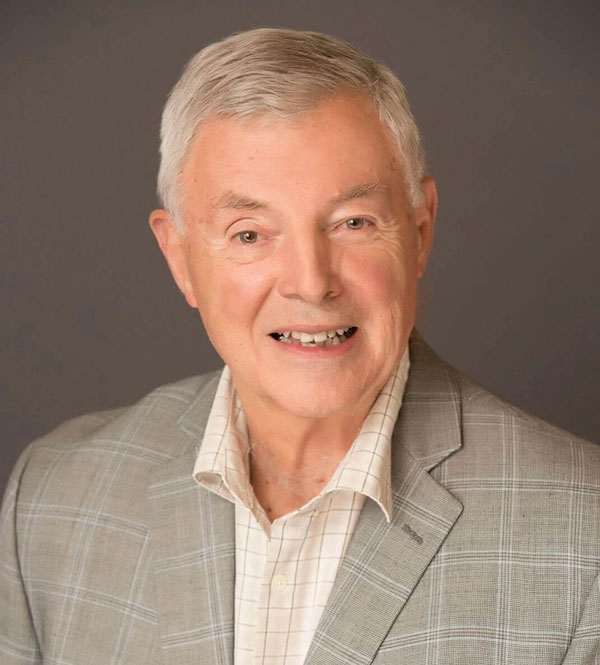
J. William Futrell, M.D.
Chairman Emeritus
Former Chief of Plastic Surgery, University of Pittsburgh Medical Center (21 years); past President, American Association of Plastic Surgeons; author of over 200 peer-reviewed publications.
Read full bio →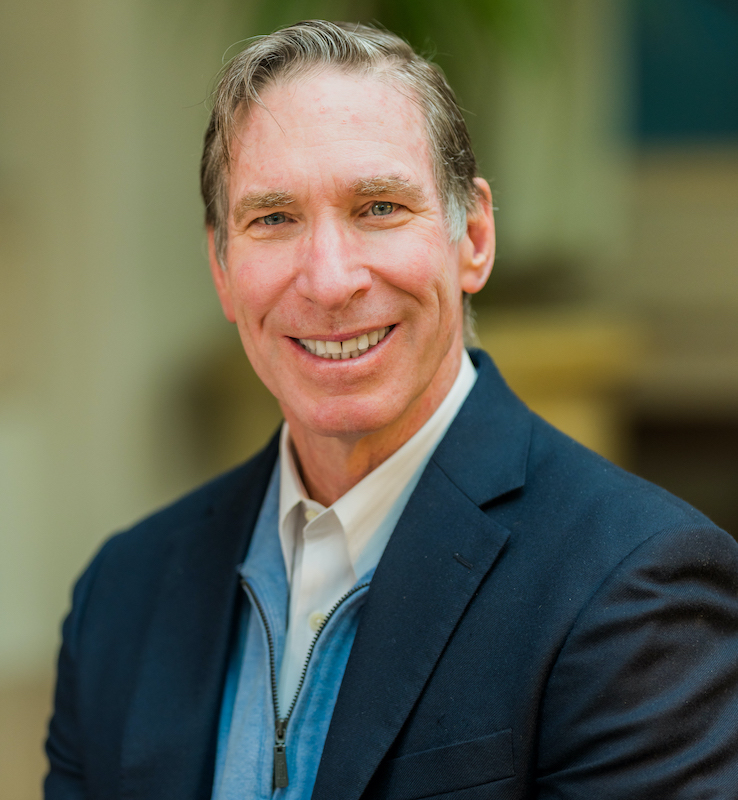
Michael Tierney
Co-Founder, CEO & Director
Former private-equity fund manager (over $1B in assets); attorney licensed in New York and California; led financings exceeding several billion dollars across the U.S., Asia, and Europe.
Read full bio →
Dolph Courchaine
Chief Information Technology Officer
Thirty years of senior IT leadership across major hospital systems and health plans, including CIO roles at multi-billion-dollar integrated healthcare organizations; leads inCytes™ and Benchmarc™ engineering.
Read full bio →
Laura Prey
Director
Three decades of senior IT leadership across healthcare, insurance, and financial services, including Thrivent and the U.S. Department of Defense's Tricare program.
Read full bio →Clinical & Scientific Advisory Board
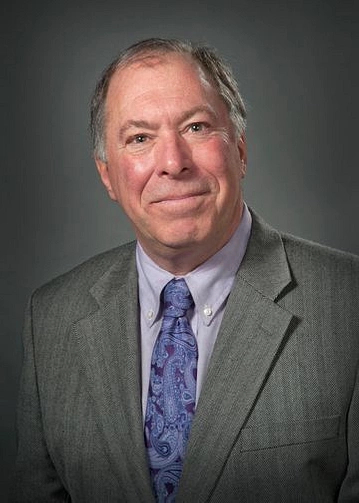
Daniel A. Grande, Ph.D.
Director of Orthopaedic Research, Feinstein Institutes for Medical Research
Pioneered the first cell-based cartilage repair therapy, now the clinical standard; 123 peer-reviewed publications, 9 patents.
Read full bio →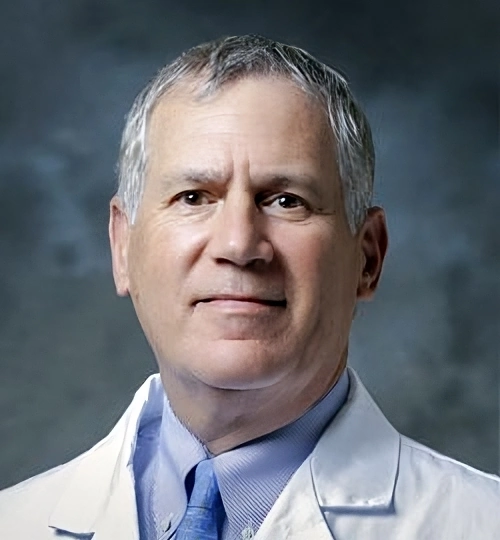
Bert R. Mandelbaum, M.D.
Co-Chair of Medical Affairs, Cedars-Sinai Kerlan-Jobe Institute
Director, FIFA Medical Centre of Excellence; Team Physician, US Soccer National Teams.
Read full bio →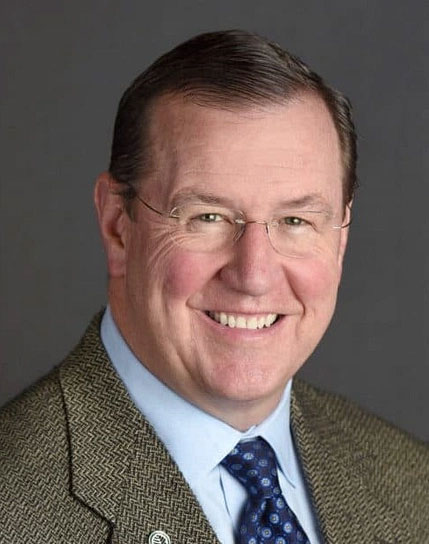
Claude “T.” Moorman, III, M.D.
President, Musculoskeletal Institute, Atrium Health
Team physician for NFL and collegiate athletics for over two decades; author of 150+ publications.
Read full bio →
Kenneth R. Zaslav, M.D.
Director, Northwell Health Center for Regenerative Orthopedic Medicine
Past President, International Cartilage Regeneration and Joint Preservation Society.
Read full bio →Foundational IP
RegenMed's methodology is protected by a continuing patent family — three U.S. patents issued since 2021, with additional filings and copyright pending. Full detail is on the Patents & IP tab.
The architecture is protected, and the protection is on the record.
A federated platform only works if participants can rely on it outlasting a funding cycle. Our position rests on an issued US patent, copyright in Circles Dataset compilations, and trade secrets around the proof and capture implementation.
Covering the federated capture and verification of clinical observational data: the protocol-defined attribute set, attested capture at the point of care, and verification of a value without disclosure of the underlying record.
Additional patent applications and copyright registrations are pending. Claim charts and the full portfolio schedule are shared under NDA during diligence.
The data model is the invention.
RegenMed’s patent family, “Method and system for processing large amounts of real world evidence,” claims priority to July 2020 and comprises three issued U.S. patents: 11,720,567 (2023), 12,204,544 (2025) and 12,705,240 (2026), with 52 claims.
The claims cover the architecture of the Circles Platform itself: canonical questions and answers, a hierarchy of protocols and sub-protocols, Circles of users and their patients’ Cases, sharing rules set by protocol and user, plain-language queries, removal of identifiers and distributed deployment.
Circles Datasets carry further protection. Each protocol’s selection and arrangement of questions is original work, and the datasets are kept as trade secrets, licensed under the Circles Dataset Ownership Agreement.
Three instruments, one purpose.
The intellectual property exists to keep the ownership promise enforceable — not to make the method unexaminable.
Patents — the architecture
The issued patents cover how evidence is captured and verified in a federated system. This is what stops the model being reduced to another brokered extract with a different label.
Copyright — the compilations
Each Circles Dataset is a protected compilation, and that compilation is owned by its Circle Members. Copyright is the instrument that makes their claim real rather than contractual goodwill.
Trade secrets — the implementation
Proof-generation and capture internals stay confidential. The standards we build on are public — FHIR, NIST zero trust — so a security reviewer can still evaluate the model.
Tell us the question you are trying to answer.
A clinical lead reads every inbound note. We will reply with the Circle closest to your question, or say plainly if there isn't one yet.